
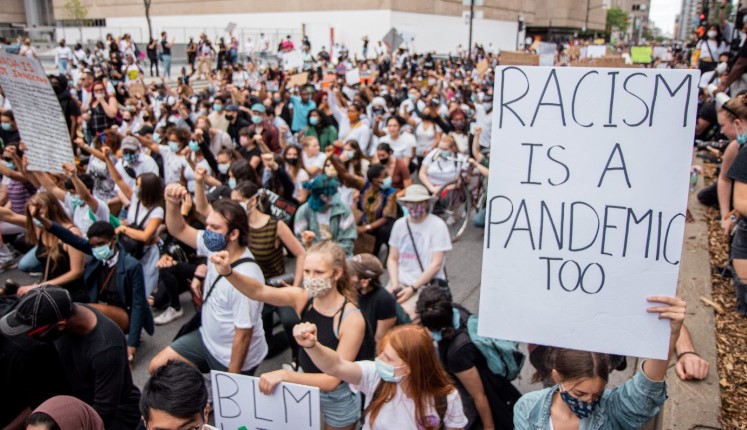
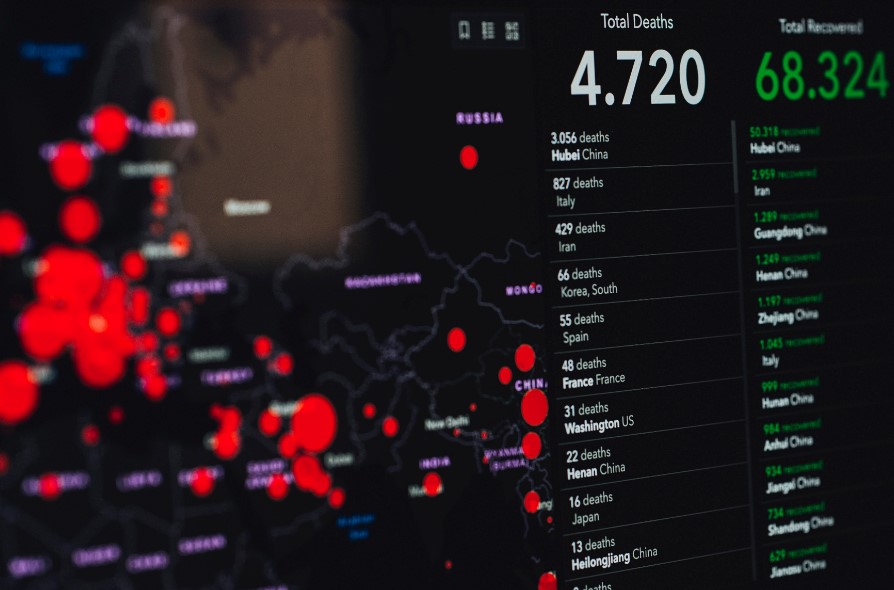
It has been argued that we are currently in the midst of two pandemics – one of COVID-19 and one of racism (1). Both pandemics are not readily visible but come across as life-threatening for some and shattering to one’s way of life for many. We hear phrases like “new normal”, statistics on how many people have died are being cited and politicised, and a sudden, violent death of George Floyd in Minneapolis, MN in the USA at the hands of police officers becomes the tipping point for protests globally about a longer-term, culturally engrained pandemic. Ethnicity and COVID-19 intersect in other ways too, particularly in the United Kingdom with one recent report (2) by Public Health England highlighting the disproportionate health disparities that exist.
In the wake of such a threat to one’s way of life, the writings of Susan Sontag (3), when writing about metaphors used during the AIDS crisis in the late 1980s could not have been more prescient: “Epidemics of particularly dreaded illnesses always provoke an outcry against leniency or tolerance – now identified as laxity, weakness, disorder, corruption: unhealthiness. Demands are made to subject people to ‘tests’, isolate the ill and those suspected of being ill or of transmitting illness, and to erect barriers against the real or imaginary contamination of foreigners”. Xenophobia, the affirming of political divisions and the scapegoating of those who do not conform to the systems that have been set up reign supreme. With fear for one’s life, for the lives of others and even for one’s way of life, a process of ‘othering’ happens. Entrenched positions ensue, there is an unwillingness to act, and a reliance on the status quo gives solace to those who are feeling unsettled by perceptions of incessant change and unrest. As a Community Psychologist, I would like to propose that the shift away from the “old normal” and the “current normal” is inevitable and there are multiple figurative ‘deaths’ and ‘re-births’ that are needed, on an individual and collective level, to bring about a healthier, saner, more connected, and less unequal society.
In the discipline of Health Psychology, there is a concept that has been used, called ‘mortality salience’: in other words, how prominent in our minds our likelihood of dying, if we continue with a certain behaviour that is likely to damage our health. The problem with this concept is that research has tended to show that we do not all react in similar ways when we see messages that are meant to increase this mortality salience in our minds. We may change our minds about a behaviour, but we still do it; something compels us to keep doing it. Research into addiction has affirmed this trend time and again. However, one interesting finding has been that people with high levels of self-esteem appear to be protected (4). It has been suggested that high self-esteem is equated with having a more positive outlook of one’s likelihood of surviving a threat. That dynamic might work up to a point, but there is nothing more equalising (and humbling) and emotionally draining than a pandemic or two…
For the most part of our everyday existence, many of us avoid talking of death or dying. But then it hits us… whether it is an actual bereavement with the loss of a loved one or we experience the ‘death’ of what we thought we’d always have – our health, loving friendships, financial or job security. And these literal or metaphorical deaths can be traumatic. In a study (5), due to be published this year, we interviewed 12 asylum-seekers and refugees on two occasions to understand their experiences of significant upheaval by seeking refuge in the United Kingdom and reflecting on how they coped with psychological and physical torture. Losses were particular salient and were vividly mourned. They had lost: their dignity, a sense of predictability, stability, security, connections with others, their old identities and a feeling of belonging. For ‘re-birth’, or post-traumatic growth, a range of coping strategies seemed to help them, including cultivating a spirit of acceptance, drawing from religious or spiritual beliefs, and recognising shifts in their own identities to incorporate feelings of personal growth – many ingredients seen by participants as giving them a ‘re-born’ self. In another study, by David Wilde and Craig Murray (6), a similar process of having threats to one’s life through a near-death experience led to personal meanings being developed as a result; participants were able to connect parts of their traumatic experience in a way that made sense to them and could be fitted into their biographies of where they were at a certain trajectory in their life course. Wilde and Murray described this sense-making as a method for people in these situations to have an ‘evolving self’.

Being aware of one’s mortality, and the mortality of others, can be life-affirming. It can light the touch paper and lead to a conflagration of combined voices saying, “ENOUGH!”. It can help to energise re-alignment of one’s life priorities and the development of a new sense of purpose and meaning-making. Paulo Coelho (7), reflecting on what may have felt like a senseless loss of life for many in the wake of the attacks on the World Trade Center in New York, USA, on September 11, 2001, commented that, “When faced by great loss, be it material, spiritual, or psychological, we need to remember the great lessons taught to us by the wise: patience, and the certainty that everything in this life is temporary. From that point of view, let us take a new look at our values. If the world is not going to be a safe place again, at least not for many years, then why not take advantage of that sudden change, and spend our days doing the things we have always wanted to do, but for which we always lacked the courage”. Personal growth and the development of an evolving self might be possible, but a conscious re-evaluation of one’s priorities may also be needed to bring about positive changes as a result of tragic or traumatic situations.
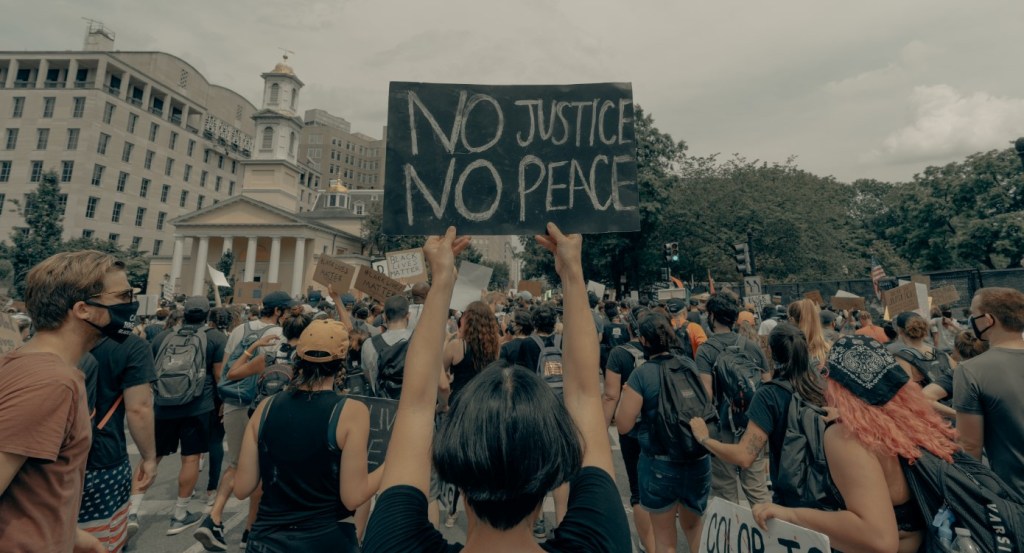
Yet, reflection alone is not enough… It may seem that post-traumatic growth can lead to inevitable benefits to a person’s psychological well-being and mental health, but this is not necessarily the case. Stevan Hobfoll and colleagues (8) were able to show that what someone might see as being post-traumatic growth may not be that helpful at all, because it could often lead to a hardening of attitudes towards a group seen as ‘the other’ and could also mean increases in a person’s levels of psychological distress. Instead, action-focused growth is needed, as well as meaning-making from trauma, to have longer-term recovery from traumatic experiences. And this is what is happening with one of the pandemics I have referred to earlier – we have seen mass protests and the call for real change, rather than more reflection and the upholding of the status quo. Matthew Bolton’s book, “How to Resist” (9) calls for a different type of action that goes beyond merely protesting – he argues for actions that are proactive and designed to lead to certain commitments from those who currently hold power and the creation of sustainable social changes.
In the Psychology Department at NTU, I am pleased to see the Department is working on the decolonisation of the curriculum. I have felt proud at having worked with colleagues in the British Psychological Society’s Community Psychology Section and with students in my Community Psychology classes in: placing a critical ‘lens’ to marginalisation; understanding people’s well-being across multiple layers; working with power dynamics; and recognising the need for activism and social action, alongside actually effecting change. However, these are just changes within the University setting or among professional colleagues and yet there are many more levels at which we can all operate to kill off old ways of thinking and acting and give birth to a totally new way of life… and that requires action.
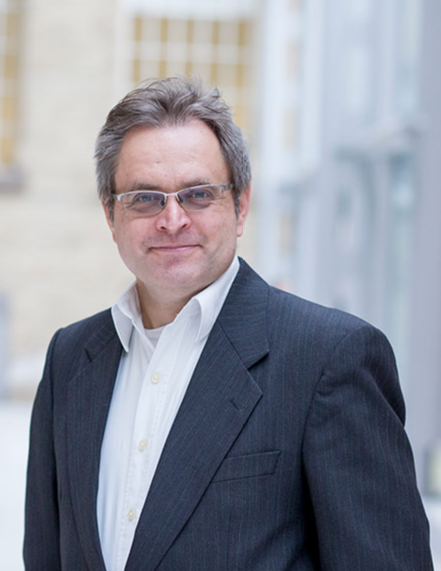 Dr Glenn Williams is Principal Lecturer in Psychology (Internationalisation & Employability). He has done research into psychological well-being/mental health, particularly the role of spirituality and creativity in impacting health and well-being. He is part of NTU’s Work, Well-Being and Performance Research Group. He has worked in the National Health Service and, since 2001, has been involved with the education and training of students in a range of fields, including nursing and healthcare, psychology, and counselling & psychotherapy. Glenn uses a Community Psychology perspective to guide his approach when doing research and was part of the British Psychological Society’s Community Psychology Section Committee from 2010 to 2017, during which time he served as Chair Elect, Chair and Vice Chair. For more information on using a Community Psychology approach when doing research, please see: https://tinyurl.com/Glenncommpsyresearch
References:
1. Petterson, L. (2020). Coronavirus weekly: racism, COVID-19, and the inequality that fuels these parallel pandemics.
2. Public Health England (2020). Beyond the data: Understanding the impact of COVID-19 on BAME groups.
3. Sontag, S. (1991) Illness as metaphor and AIDS and its metaphors. Penguin. p. 166.
4. Hansen, J., Winzeler, S., & Topolinski, S. (2010). “When the death makes you smoke: A terror management perspective on the effectiveness of cigarette on-pack warnings”. Journal of Experimental Social Psychology. 46 (1): 226–228
5. Taylor, S., Charura, D., Williams, G., Shaw, M., Allan, J., Cohen, E., Meth, F. & O’Dwyer, L., (2020, in press). Loss, grief and growth – interpretative phenomenological analysis of trauma in asylum-seekers and refugees. Traumatology. DOI:10.1037/trm0000250
6. Wilde, D.J. & Murray, C.D. (2009). The evolving self: finding meaning in near-death experiences using Interpretative Phenomenological Analysis. Mental Health, Religion & Culture, 12 (3), 223-239, DOI: 10.1080/13674670802334910
7. Coelho, P. (2005) Like the flowing river. Harper Collins. pp.179-180.
8. Hobfoll, S. E., Hall, B. J., Canetti-Nisim, D., Galea, S., Johnson, R. J., & Palmieri, P. A. (2007). Refining our understanding of traumatic growth in the face of terrorism: Moving from meaning cognitions to doing what is meaningful. Applied Psychology, 56 (3), 345-366.
9. Bolton, M. (2017). How to resist: Turn protest to power. Bloomsbury.
Header image credit: Ying Ge on Unsplash
 Psychology at Nottingham Trent University