
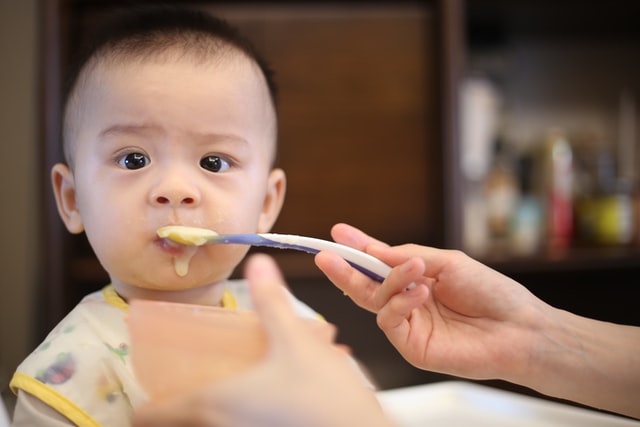
Lock-down has brought out the worst of my snacking habits. What’s your go-to treat: chocolate or crisps? We each seem to have a preference for either sweet or savoury foods – and some people even prefer both together. No doubt our food preferences are strongly influenced by our cultural upbringing. But there is still variation in food preferences within populations that is difficult to explain.
Some of our food preferences seem to have an innate component. Sweet tastes are generally preferred, especially by children (Mennella, Finkbeiner, & Reed, 2012). Bitter is generally rejected, possibly because bitter can indicate toxicity (Shi, Zhang, Yang, & Zhang, 2003). In addition, there is a lot of individual learning that influences our food choices. Previous research has shown that the taste of what a mother eats can be detected in amniotic fluid and breast milk, which means that an infant already learns about palatable foods before actually eating any foods (Mennella, Jagnow, & Beauchamp, 2001). While babies are often highly receptive towards new tastes and flavours, children tend to dislike new foods, but this neophobia declines with age (Koivisto & Sjoden, 1996). Which leads to the question, how do environmental factors, learning, and their interaction influence our food preferences and our willingness to try new foods?
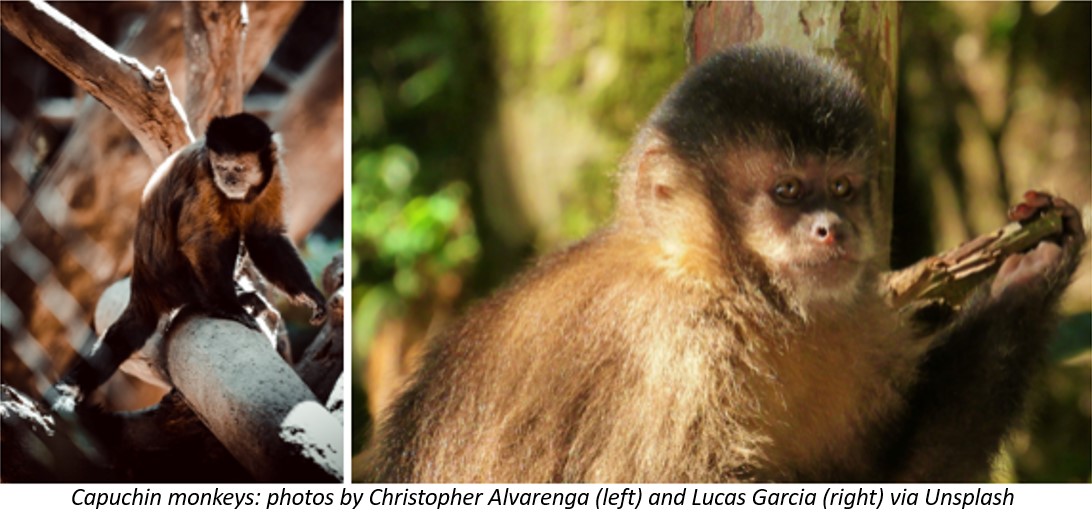
This question can be difficult to test in people; after all, people would already have established preferences and years of individual and cultural learning that would influence their preferences. It is also difficult to control what foods would be new to them (i.e. never tried before) to individual participants. Instead, we attempted to study this question in tufted capuchin monkeys (Sapajus apella). Capuchin monkeys are an approximately cat-sized, Central and South American monkey species who are highly social and highly intelligent. Like us, capuchins are a generalist species with a diet in the wild ranging from fruit to insects (Visalberghi, Janson, & Agostini, 2003). Previous studies have indicated that capuchins are innately neophobic when it comes to new foods (Addessi, Galloway, Birch, & Visalberghi, 2004), with adults being more neophobic than juveniles (Fragaszy, Visalberghi, & Galloway, 1997). Importantly, since our study monkeys were born and reared in captivity, we had complete knowledge over their eating habits and the kinds of foods that were familiar and new to them.
We set out to study two questions: first, how do capuchin monkeys choose between foods that are new to them, and familiar foods that are matched by fat or sugar content? We predicted that the presence of the familiar food would be “protective”—that is, capuchins would initially choose and consume the familiar food item more frequently than the brand new food item. We also predicted that over time, as capuchins would sample the new food, the two foods would be consumed with similar frequency because of their comparable nutrient and calorie profiles. Second, we asked: do capuchin monkeys prefer new foods that are high in sugar or high in fat? If sweet taste indicates a lack of toxicity (Addessi et al., 2004), then monkeys might prefer new high sugar foods, but not new high fat foods. On the other hand, optimal foraging theory suggests that individuals should choose foods that maximize their total energy intake (high-calorie foods). If so, then capuchins should equally prefer new high sugar and new high fat foods compared to low sugar and low fat foods.

In 2 experiments, we tested 18 capuchin monkeys where each monkey was presented simultaneously with a choice of two foods: a piece of familiar food (e.g. a raisin) and a piece of unfamiliar food (e.g. a piece of dried mango). The monkey could choose one food by reaching out and taking it from the experimenter. Foods varied so that they were either high in sugar, low in sugar, high in fat, or low in fat. We measured the time it took to choose a food item (latency) as well as whether the chosen food item was consumed by the monkey. Overall we found that despite being described as neophobic when it comes to foods, our monkeys readily explored new food items during the experiment (10-20% of trials across sessions). This is potentially attributable to social facilitation effects; in other words, monkeys could observe each other sampling the foods, which could have influenced their own willingness to try the new foods. But we also found that acceptance of new foods was dependent on the nutrient content of the food. Capuchins showed behaviours consistent with neophobia (longer selection latency, more food rejections, and less frequent consumption of new foods) only for low fat and low sugar foods, not high fat and high sugar foods. In addition, capuchins were more accepting of high sugar foods rather than high calorie foods, suggesting an important role of simple sugars like fructose and sucrose in taste preference development. But, importantly, this preference was not absolute: capuchins still varied their consumption of all foods throughout the study, seeking variety even while maintaining a clear preference.
In conclusion, our results suggest that fat and sugar content in food is an important factor influencing neophobia in capuchin monkeys. The ability of capuchins to quickly discriminate between foods based on nutrient content while maintaining dietary variety is consistent with optimal foraging theory. Further examination into the specific sensory cues that drive these behaviours may help disentangle the mechanisms that shape food choices. As for me, I’ll try to continue to have 5-a-day and find comfort in my familiar staples; but I’m more willing than ever to experiment with some new cake recipes.

Dr. Annika Paukner is a Senior Lecturer in Psychology. She studies primate behaviour and cognition, and is close to perfecting her chocolate-hazelnut slices.
Heuberger, B, Paukner, A, Wooddell, LJ, Kasman, M, Hammond, RA. The role of novelty and fat and sugar concentration in food selection by captive tufted capuchins (Sapajus apella ). American Journal of Primatology. 2020; e23165. https://doi.org/10.1002/ajp.23165
References
Addessi, E., Galloway, A. T., Birch, L., & Visalberghi, E. (2004). Taste perception and food choices in capuchin monkeys and human children. Primatologie: revue publiee sous l’egide de la Societe francophone de primatologie, 6, 101.
Fragaszy, D., Visalberghi, E. and Galloway, A. (1997). Infant tufted capuchin monkeys’ behaviour with novel foods: opportunism, not selectivity. Animal Behaviour, 53(6), 1337-1343.
Koivisto UK & Sjoden PO (1996) Food and general neophobia in Swedish families: parent-child comparisons and relationships with serving specific foods. Appetite, 26, 107–118.
Mennella, J. A., Finkbeiner, S., & Reed, D. R. (2012). The proof is in the pudding: children prefer lower fat but higher sugar than do mothers. International Journal of Obesity, 36(10), 1285-1291.
Mennella, J. A., Jagnow, C. P., & Beauchamp, G. K. (2001). Prenatal and postnatal flavor learning by human infants. Pediatrics, 107(6), e88-e88.
Shi, P., Zhang, J., Yang, H., & Zhang, Y. P. (2003). Adaptive diversification of bitter taste receptor genes in Mammalian evolution. Molecular Biology and Evolution, 20, 805–814.
Visalberghi, E., Janson, C.H. & Agostini, I. (2003). Response toward novel foods and novel objects in wild Cebus apella. International Journal of Primatology, 24(3), 653-675.
Header image credit: life is fantastic on Unsplash
 Psychology at Nottingham Trent University