
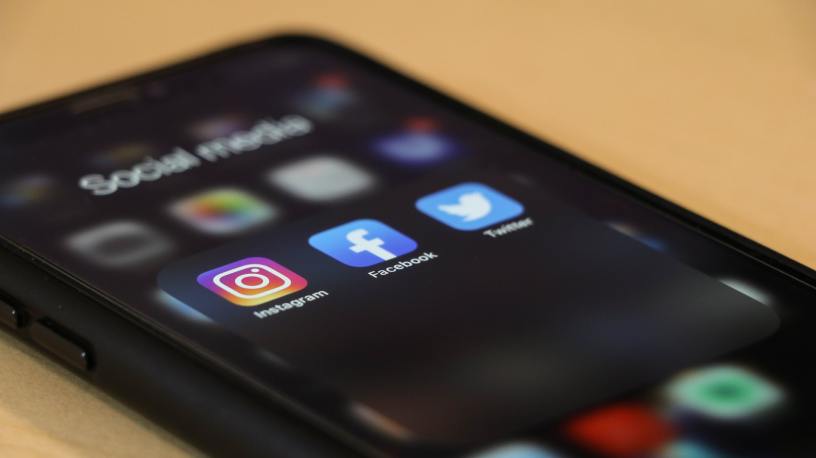
Approximately 4.5 billion people use the internet and 2.4 billion people use Facebook (Kemp, 2020). Other social networking sites (SNSs) including Instagram, YouTube, and WhatsApp have more than a billion users each (Ortiz-Ospina, 2019). This means that SNSs are now used by more than two-thirds of all internet users, this is a huge number of people! SNSs have transformed the way we live our lives, they can help people to stay connected with friends, family, and work colleagues, they can improve communication, and allow for the sharing of photographs and online videos. However, there is evidence that frequent use of SNSs (i.e., more than 2 hours every day) can be associated with poor mental health and well-being.
Furthermore, recent research proposes that problematic SNS use (PSNSU) or excessive SNS use might even represent a distinct potential mental health problem. Researchers at Nottingham Trent University have investigated the psychological impact of technology and one paper (published last year, by Dr Zaheer Hussain and Professor Mark Griffiths) examined the associations between PSNSU, sleep quality, attention deficit/hyperactivity disorder (ADHD), depression, anxiety, and stress among SNS users. In the study, 638 SNS users completed an online survey assessing SNS addiction, sleep quality, ADHD, depression, anxiety, and stress. Findings showed that PSNSU was associated with high levels of ADHD and anxiety. The findings also suggested that PSNSU was associated with poor sleep quality.
More recently, Dr Zaheer Hussain and Professor Vladan Starcevic (University of Sydney) conducted a review study examining the research methods that have been employed to investigate PSNSU. The researchers identified survey, longitudinal and neuroimaging studies, as well as several studies using other research methods. The researchers concluded that cross-sectional studies – where data is only collected at one point in time – have been a popular method of investigating PSNSU, but they have significant limitations; they make it difficult to make causal inferences, only provide a ‘snapshot’ of the research situation, and are susceptible to response bias. On the other hand, longitudinal and neuroimaging studies may provide important insights, but they are more difficult to conduct and have therefore been less utilised.

Consequently, there are many gaps and opportunities to improve our understanding. The field would benefit from an integration of research methods, as well as studies including SNS users from various age groups. The research field also requires new methods of investigation; for example, the emerging methods of social media analytics and psychoinformatics could be potentially used in the near future to examine complex research questions. SNS’s are here to stay with increasing numbers of people now using them so it is important to understand the different aspects of SNS use. Studying and understanding the underlying mechanisms of SNS’s, such as Likes or Retweets, and how they encourage addictive behaviours is of paramount importance.
About Dr Zaheer Hussain:

Zaheer is an active researcher at NTU, with expertise in addictive behaviours and technology use, as well as teaching on topics within social psychology, cyberpsychology, and research methods.
References
Hussain, Z., & Griffiths, M. D. (2019). The Associations between Problematic Social Networking Site Use and Sleep Quality, Attention-Deficit Hyperactivity Disorder, Depression, Anxiety and Stress. International Journal of Mental Health and Addiction, 1-15. doi: 10.1007/s11469-019-00175-1 (See full paper here)
Hussain, Z., & Starcevic, V. (2020). Problematic Social Networking Site Use: A Brief Review of Recent Research Methods and the Way Forward. Current Opinion in Psychology, 36, 89-95. doi:10.1016/j.copsyc.2020.05.007 (See full paper here)
Kemp, S. (2020). Digital 2020: 3.8 billion people use social media. Accessed 27 July 2020
Ortiz-Ospina, E. (2019). The rise of social media. Accessed 27 July 2020:
 Psychology at Nottingham Trent University