

Saskia Hulme and Glenn Williams share their thoughts on how yoga participation might impact people’s psychological well-being and they highlight a call for participants in a study they are currently running.
Glenn’s story
I’m Glenn Williams, a Principal Lecturer in Psychology (Internationalisation & Employability) in NTU Psychology, and I’m sharing this blog with Saskia, who has joined our team to work on our project exploring yoga and its possible impacts. The idea for this study has been a long time in coming. I have been working in the spirituality and well-being field for several years and was called upon to attend a meeting in which we were hosting a visit from Professor Raj Kumar, Vice-Chancellor of Panjab University – one of NTU’s strategic partners. I was excited to find out more on how we could collaborate with colleagues at Panjab University to carry out some international research between us and the conversation with Professor Kumar was a wonderful way to explore these possible research avenues. As the discussions proceeded, I was pleasantly surprised to hear about the extensive teaching that Panjab University had been doing into Yoga Science and in the education and training of yoga practitioners. It was inspiring to see that a practice that is so spiritually rooted, like yoga, appeared to be very much in the mainstream in Indian society and worthy of academic study and tutoring. After this meeting with the Vice Chancellor, Vidhi Sahae, Senior Global Partnerships Manager at NTU Global, facilitated another meeting, but this time it was with two Professors who were keen to do a research project into yoga and its effects. We talked about different options, some of which seemed feasible at the time, with experimental designs to see how people responded physically and psychologically to going through the process of yoga practice. This was before COVID-19 struck. Once it did, we needed to think through other options and so we decided to create a global, cross-cultural survey to capture the views and experiences of yoga practitioners. It’s a project filled with promise and we hope that those who read this blog, and whom are those who take part in yoga, might want to participate in our study. I’ll leave the rest of the story to Saskia…
Saskia’s story
I’m Saskia Hulme, a final year BSc (Hons.) Psychology student at Nottingham Trent University and, as part of one of my final year modules, I have been working as a Research Assistant with Dr Glenn Williams and Professor Harpreet K. Chhabra and Professor Nandita Singh from Panjab University (India) to conduct a study into how taking part in yoga participation might impact participants’ psychological well-being. I would like to introduce you to my personal experiences of how I came to take part in yoga, its effects on me, and also what I have found so far in my searches of the literature into this field. This project has given me a whole new perspective into the role that yoga can have in people’s live and I’m keen to see if any of you, who might have taken part in yoga, might also want to share your experiences by responding to the global cross-cultural survey that we’re currently doing.
I came to University having never participated in yoga before. I suppose I thought of it as a hobby that typically women in age groups other than my own did as a social meet up with friends! Statistically, I am not necessarily wrong as 72% of yoga practitioners are female (1) and those in the 30-39 years age bracket were most represented. My age bracket of 18-29-year-olds only accounted for 19% of the yoga practitioner population (2). I was surprised that there weren’t more people in my age group taking part because many of them would be experiencing significant changes in their lives and I thought that perhaps yoga might help to deal with these changes and the stress that it might induce. I am curious to see if more people are turning to the practice of yoga during the chronic stress brought about by this COVID-19 pandemic so I hope to find out how widespread it might be as a coping method.
Saskia’s Experiences with Yoga
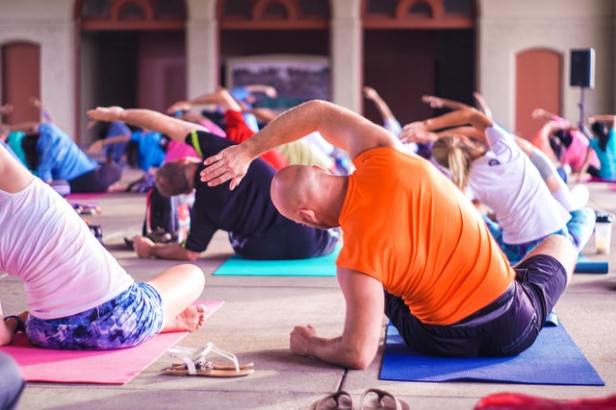
My first encounter with yoga was when my flatmates and I decided to take part in a group yoga session during Term-time, just for the fun of it. I must admit, it was after this first session that I then really started to take more of an interest in yoga. I finished the session radiating so much positivity and as clichéd as it sounds, I was feeling very Zen! My flat mate was laughing at how baffled I was feeling. I was so taken aback by the immediate positive effects that I was experiencing from one session. This experience really heightened my excitement for continuing my participation and developing my yoga skills.

However, away from Term-time, something felt very different about practising yoga alone at home. Was it the interaction and influence with others? This is possible, as a study published in the Journal of Social Sciences found that individuals gravitate towards the exercise behaviours of those around them (3). In a way, this exercising behaviour appeared to be ‘contagious’, but presumably in a healthier way! Was it physically attending a class and feeling a sense of achievement? This is a potential factor too as social psychological research has shown that being surrounded by others while performing a task could often lead to higher levels of physical achievement (4). Alternatively, just having the routine and structure by attending classes may help in reducing a yoga practitioner’s level of focus on what they need to do and may lead to less distractibility in that day. Perhaps it was the motivation of being directly instructed by a teacher? Some yoga practitioners may thrive on getting feedback from an instructor to know that the processes are being followed correctly. The instructor may be a useful means of keeping on track with yoga practice goals and in helping the practitioner to stay motivated. Despite all of these possible factors to inhibit my practice of yoga, I also realised that developing my own practice and being adaptable and autonomous was also vital to me, so I scheduled yoga into my weekly routine and this soon became my new norm. Alongside all of this, several things helped me to create this routine over time: I has already started to practice yoga more frequently; I was intrigued by its potential and saw it as a vital method of enhancing my psychological well-being; I regularly attended sessions at the NTU gym with my friends, as well as participating from home using YouTube outside of term time; and having my friends attending with me during term time really enhanced my commitment to such yoga participation.
As a student, I turn to yoga quite regularly, especially when I begin to feel overwhelmed and pressured with work and the current climate of the social distancing and lockdown requirements we have had over several months. I speak from bitter experience when I say that social media and the constant use of technology has made it challenging to just sit quietly and reflect, but yoga has helped me to become more centred and less distractible. What has helped me also is in reaching out to other friends who also practise yoga. Zoom yoga session have been a lifeline for me during the three lockdowns we have had in the United Kingdom and has meant that I’m socialising with friends and feeling positive and happy afterwards.
What did Saskia find with research about the potential impacts of yoga on well-being?
As part of my work as a Research Assistant, I reviewed literature into yoga participation I was surprised to find research that I identified with when looking at the positive effects that I got from taking part in yoga. For example, participants in yoga interventions reported feelings of reduced anxiety and higher levels of psychological well-being (5). This confirmed to me that participation in yoga could confer a range of positive effects among individuals.
Research (6) has shown there are several areas in which yoga participation can influence psychological well-being:
Reductions in stress/anxiety levels
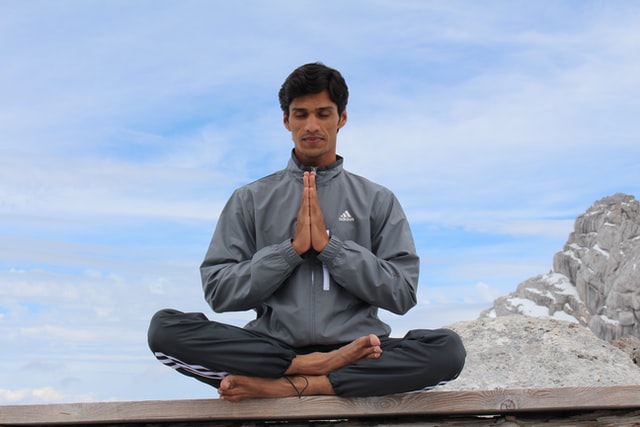
For many, yoga could be used as escapism. Stress and anxiety feelings are all too common nowadays and are more likely to be chronically experienced in the wake of this COVID-19 pandemic. Yoga is meant to encourage individuals to develop an appropriate relaxation response; it is meant to shift the balance from the sympathetic nervous system and the fight-or-flight response to the parasympathetic system and the relaxation response. Yoga has been found to balance energy usage, which has been found as vital for the functioning of a healthier immune system. Yoga practice has been found to stimulate stronger coping styles (6), meaning that those who practice yoga appear to be better able to deal with stress more effectively, and therefore leads to the development of a more resilient way of thinking, feeling, and acting.
Impact on levels of positive emotions and moods
Various studies have also demonstrated that yoga as an intervention increases quality of life, mindfulness, and reduces perceived stress (6, 7). Several areas of quality of life have been found to improve via yoga practice, including the domains of work and of relationships with others. Therefore, yoga practice could have the potential for creating enhancements to various aspects of one’s life. Research has argued that a purely medical approach to treating physical or mental health difficulties could be less effective than using yoga to heal various layers of one’s well-being and that it has been argued that yoga could be a more holistic approach to tuning into various facets of one’s physiology and emotional experiences (8). It has been suggested that, if yoga was used as an intervention, it can be especially helpful for adolescents to get into a state of calm and focus when they are being constantly bombarded with imagery and opportunities for social comparison in a world mediated by a diversity of social media platforms and distractions (9).
Social benefits of yoga
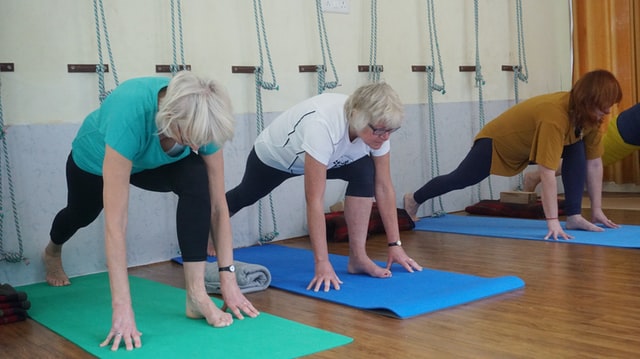
Social interaction is fundamental for well-being, and this is pronounced even more so when facing a deficiency in physically interacting with others during this COVID-19 pandemic and the need to distance physically from each other. Yoga is suggested to promote social benefits (10). Due to the perceived decrease levels in stress levels when practicing yoga, it is also been shown to enhance communication and receptivity to others and to elicit more positive interactions with family and friends. There is support to this finding with one author (11) saying that exercising with a group carries a plethora of intertwined benefits that include enhancing consistency of exercise, its duration, the motivation to take part, more conversation with others, and feelings of inspiration.
What next? If you practice yoga, take part in our research!
After doing this literature review, it still looks like there are so many unanswered questions that research could help to uncover – Why do people take part in yoga? What are the benefits to taking part and are there some negative side-effects too? Is the power of yoga one that relies on following a certain type of yoga practice? Could it be that yoga would be an appropriate intervention within the workplace to help employees to build their resilience levels and cope better with stress/anxiety? Or would yoga be better embraced with its spiritual background, rather than the mainly physical focus that some practitioners might adopt when practising it? Yoga could hold significant potential for providing practical applications in many domains or aspects of life, but we need to learn more about your experiences of yoga and how it has affected you.
If you have taken part in yoga practice at any point in your life, we would be delighted to hear more from you by getting responses to our online global survey, which is now taking place (ethical approval granted by Nottingham Trent University’s Schools of Business, Law and Social Sciences Research Ethics Committee). To take part, please go to this web page: https://tinyurl.com/NTUPUyogastudy
We will be keen to share in another blog about what we find in our current study as soon as we have some results, so watch this space!
References
(1). Rakicevic, M. (2020, December 12). 31 Amazing Yoga Statistics: Find Out Why It’s So Popular. https://disturbmenot.co/yoga-statistics/
(2) Zach. (2018, November 3) 5 Yoga myths debunked. https://www.yogadistrict.com/5-yoga-myths-debunked/
(3). Plante, T.G., Madden, M., Mann, S., & Lee, G. (2010). Effects of perceived fitness level of exercise partner on intensity of exertion. Journal of Social Sciences, 6 (1), 50-54.
(4). Van Yperen, N.W. (2020). Achievement goals and self-regulation in the sport context. In: P.A.M. Van Lange, E.T. Higgins, & A.W. Kruglanski (Eds.). Social Psychology: Handbook of Basic Principles (third edition). New York: The Guilford Press.
(5). Kidd, M., & Eatough, V. (2017). Yoga, well-being, and transcendence: An interpretative phenomenological analysis. The Humanistic Psychologist, 45(3), 258–280. https://doi.org/10.1037/hum0000068
(6) Ojha, H. & Yadav, N.P. (2016). Effects of some Yogic practices on psychological well-being of the aged: An intervention study. Journal of the Indian Academy of Applied Psychology, 42(2), 291-298.
(7). Telles, S., Gupta, R. K., Kumar, A., Pal, D. K., Tyagi, D., & Balkrishna, A. (2019). Mental Wellbeing, Quality of Life, and Perception of Chronic Illness in Yoga-Experienced Compared with Yoga-Naïve Patients. Medical Science Monitor Basic Research, 25, 153–163. https://doi.org/10.12659/MSMBR.914663
(8). Woodyard C. (2011). Exploring the therapeutic effects of yoga and its ability to increase quality of life. International Journal of Yoga, 4(2), 49–54. https://doi.org/10.4103/0973-6131.85485
(9). Hagen, I., & Nayar, U. S. (2014). Yoga for children and young people’s mental health and well-being: research review and reflections on the mental health potentials of yoga. Frontiers in Psychiatry, 5, 35. https://doi.org/10.3389/fpsyt.2014.00035
(10). Riley, K. E., & Park, C. L. (2015). How does yoga reduce stress? A systematic review of mechanisms of change and guide to future inquiry. Health Psychology Review, 9(3), 379-396.
(11). Griesel, D. (2017, September 15) The health benefits of working out with a crowd. https://silverdisobedience.rocks/category/podcast/
 Psychology at Nottingham Trent University