
by Lucy Betts
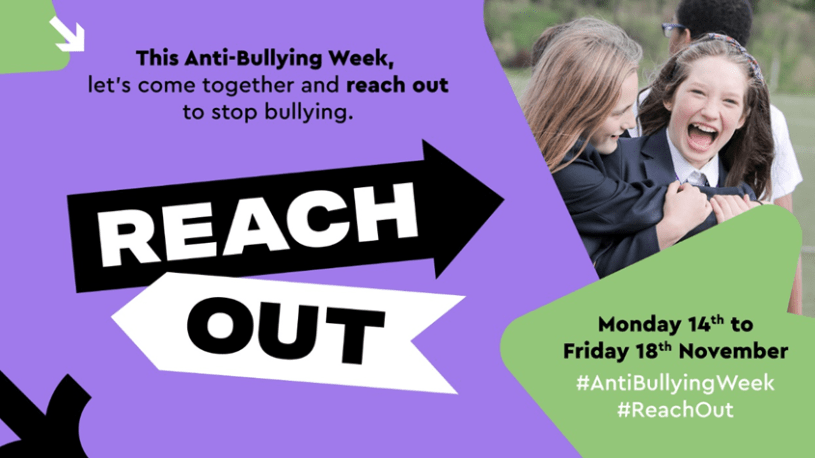
This year the theme for Anti-Bullying Week is Reach Out. Reach Out was chosen following the Anti-Bullying Alliance’s consultation with young people and teachers who suggested a theme to empower individuals when the experience bullying. This important theme also complements recent research by members of the Bullying and Aggressive Behaviour Research Group that explores young people’s tendency to disclose experiences of cyberbullying.

Our research explored 11- to 15-year-olds tendency to disclose cyberbullying. We found that 88%, of the nearly 600 adolescents we worked with, said that they would disclose cyberbullying. When we considered who was more likely to disclose cyberbullying, we found that young women and those who had experienced lower levels of cyberbullying were more likely to report that they would tell someone if they experienced cyberbullying.
We also asked the adolescents to report who they thought would be helpful if they disclosed that they had experienced cyberbullying. We found that there was some variation in who was perceived to be helpful according to age. Those who were younger thought that their parents and police would be helpful, whereas those who were older thought friends would be helpful. Young women also reported that their friends would be helpful. The variation seen here may reflect the growing importance of peers during adolescence.
While the overall figures were high for those adolescents who said they would disclose cyberbullying, it is important that we think about the reasons why they may choose not to Reach Out and disclose cyberbullying experiences. In our study, we gave the adolescents the option to give their reasons for not disclosing cyberbullying. The most frequent reason given for not disclosing was that the adolescents thought that they could manage the cyberbullying on their own (42%). However, other reasons included embarrassment (14%), concern that others would judge (11%), fear that a disclosure would exacerbate the situation (11%), and belief that others would not help (10%).

In summary, we found that the vast majority of adolescents said that they would disclose experiences of cyberbullying. However, it remains to be seen whether this perception would translate into adolescents reaching out if they did encounter cyberbullying. On the one hand, while many in our sample reported feeling able to manage the cyberbullying, of course this still leaves a large number who didn’t feel that way – who would remain silent and not seek support, out of fear or embarrassment. Therefore, it is important to consider how we can facilitate people to reach out if they experience cyberbullying and why research like this, and the work of The Anti-Bullying Alliance, is so necessary.
You can find more about these research findings in (article is free to download)
- Betts, L. R., Spenser, K. A., & Baguley, T. (2022). Describing disclosure of cybervictimization in adolescents from the United Kingdom: The role of age, gender, involvement in cyberbullying, and time spent online. The Journal of Genetic Psychology, 183, 40-53. Article link: https://www.tandfonline.com/doi/full/10.1080/00221325.2021.2001413
Image credits
- Anti-bullying week poster image from the Anti-Bullying Alliance
- Silhouette image by Patrick Fore on Unsplash
- “Private” image by Tim Mossholder on Unsplash
 Psychology at Nottingham Trent University