

Lucy Betts & Agii Badrakh
Monday 11th November 2024 marks the start of this year’s Anti-Bullying week in the UK. The week-long activities are co-ordinated by the Anti-Bullying Alliance. As in previous years, members of NTU Psychology’s Bullying and Aggressive Behaviour research group will be encouraging as many people as possible to join in #OddSocksDay (by wearing a pair of odd socks on Tuesday 12th November) to celebrate what makes us all unique as part of Anti-Bullying week. Raising awareness is vital, and builds upon our research, which aims to understand bullying, banter, and the factors influencing it – our latest article from NTU colleagues Agii Badrakh and Lucy Betts picks out some key themes from their newly published research into the way digital cues (such as emojis) affects how we communicate and interpret online interactions.
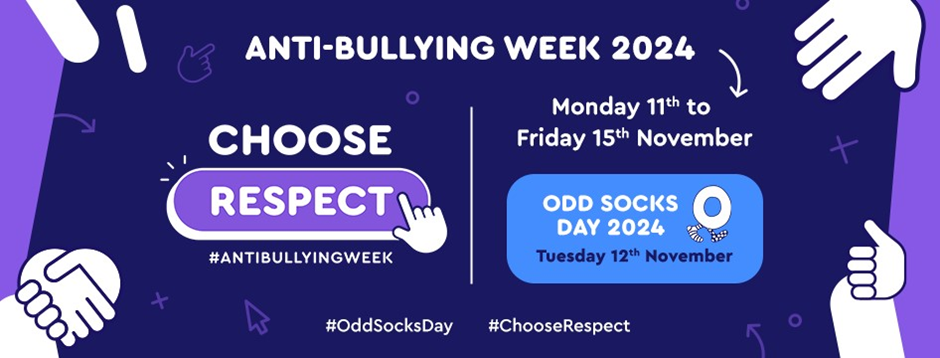
This year the theme for Anti-Bullying Week is Choose Respect. Choose Respect was chosen following the Anti-Bullying Alliance’s consultation with young people and teachers who wanted a theme that empowered them to do something positive. The theme Choose Respect also complements a recent systematic review undertaken by Agii Badrakh that explored the role of digital visual cues in online banter.
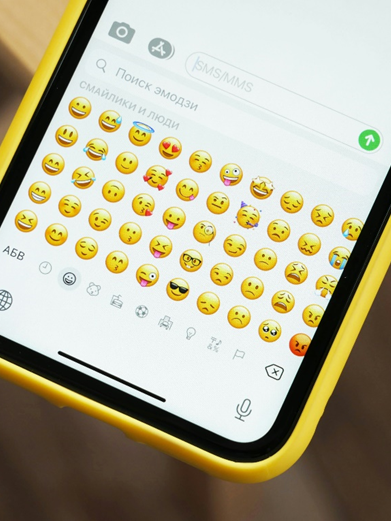
Digital visual cues include emojis, emoticons, GIFs, personal photos and videos that can be used as a way to reduce risks of someone misinterpreting online banter. The systematic review of previous research explored how adolescents and emerging adults perceived and interpreted the role of digital visual cues in online banter and how they use those cues in their online banter.
Initially, over 12,000 relevant papers were identified! But through a two-stage process of evaluating which articles were most relevant to our research question, this was reduced down to just 17. These articles were then all analysed using reflexive thematic analysis, which is a method for identifying and interpreting patterns in qualitative data, and this identified four themes…
- Digital cues are an essential part of digital banter
- Digital cues are ambiguous
- Harmful online banter containing digital cues
- Personal and contextual effects.
The first theme (that digital cues are an essential part of digital banter) reflected that digital cues are frequently used in digital banter and humour as they can provide context for a comment and highlight the intent behind the comment. In these circumstances digital cues are being used as a way to try to mitigate against someone misinterpreting the comment as something other than banter. However, the second theme (digital cues are ambiguous) reflected that there is still a chance that such cues may be misinterpreted. For example, the same cue can have many different meanings, groups may generate their own meanings for cues, and digital cues may lack the nuance of multi-modal non-verbal cues that we use in face-to-face interactions.
The third theme (harmful online banter containing digital cues) reflected that digital cues can be intentionally used in a harmful way. Examples of these kinds of behaviour include sharing of images of others without their permission or making comments without realising the potential to cause offense. Relatedly, individuals may use the term “it’s only banter” to downplay the significance of their behaviour and mask aggressive acts as something more benign. The final theme (personal and contextual effects) highlighted the importance of being aware that a number of factors can influence how cues are interpreted. For example, age, gender, and the relationship with the sender and their social status may all influenced how we might decide what these cues mean in relation to an online interaction we are having.
In summary, while digital cues may be helpful in communicating and signalling online banter, we know from our systematic review that they can still be ambiguous. Therefore, we are encouraging everyone to be mindful of the digital cues that they use when they engage in online banter and remember to Choose Respect when communicating with others.
You can learn more about our research findings here:
Badrakh, A., Buglass, S. L., Betts, L. R., & Abell, L. (2024). The role of digital cues in online banter: a systematic review of adolescents’ and emerging adults’ views, uses and interpretations. Current Psychology, 1-12. Available to download via this link.
About the authors
Lucy Betts
Lucy Betts is a professor of social developmental psychology and lead of the bullying and aggressive behaviour research group at NTU. Her current research examines experiences of banter, cyber bullying, bullying, and harassment.
Agii Badrakh
Agii Badrakh is a second-year doctoral student in the Psychology department. Agii’s PhD research explores online banter among emerging adults, focusing on the use and interpretation of graphical cues, particularly emojis
Image credits
- Main image: via Adobe
- Anti-Bullying Week 2024 info image from the Anti-Bullying Alliance
- Emoji image: photo by Domingo Alvarez E on Unsplash
- Phone/emoji image: Photo by Denis Cherkashin on Unsplash
- Choose Respect image from the Anti-Bullying Alliance
 Psychology at Nottingham Trent University