

By Panayiota-Maria Langellier
A psychology degree can give you a great starting point for a huge variety of career paths. A psychology degree isn’t only for those who want to become psychologists, but we do know that many of you have a strong interest in clinical psychology careers and working with children, so our latest blog – from NTU Psychology graduate, Panayiota-maria Langellier – should be of great interest. We’re extremely grateful to Panayiota-maria for taking the time to share some thoughts and insights on the day-to-day experience of the Children’s Wellbeing Practitioner role, as well as tips for those of you considering similar careers.
Are you passionate about impacting the lives of children and young people? Do you thrive in clinical settings and find joy in working with families? If so, the unique and rewarding role of a Children’s Wellbeing Practitioner might be a role to consider.
What is a children’s wellbeing practitioner?
Children’s Wellbeing Practitioners (CWPs) are trained to assess and support children and young people (CYP) between the ages of 5–18 with common mental health difficulties, particularly mild to moderate symptoms of anxiety, low mood, and behavioural problems. CWPs offer a range of low-intensity interventions based on cognitive behavioural therapy principles and guided self-help. They aim to help CYP and their parents/carers in the self management of their recovery.
CWPs work within various CYP mental health settings, including Child and Adolescent Mental Health Services (CAMHS), schools, third-sector organisations, and private providers commissioned by the NHS. These may be based in GP practices, healthcare centres, schools, or other community venues. As a CWP, you will work alongside other clinicians, deliver evidence-based psychological therapies, and be supervised by senior practitioners.

.
How did my psychology degree at Nottingham Trent University (NTU) and work experience help me?
Studying Psychology at NTU enabled me to receive an education at one of the largest Psychology departments in the UK. Recognised scholars and practitioners taught me, which enabled me to learn and apply a wide range of knowledge and skills in solving day-to-day challenges in clinical settings, as well as to use these skills to engage in practices and collaborate within multidisciplinary teams to develop effective solutions. Moreover, my psychology degree has given me a unique knowledge base and skill set in different areas of psychology and a strong awareness of the British Psychological Society’s code of ethical principles, enabling me to put these into practice, which organisations have undoubtedly benefited from. Thus, the knowledge and skills this degree gave me have laid the foundation for my following work experiences.
Gaining experience can also be extremely useful. During my degree, I found several opportunities, such as being a volunteer Community Panel Member within the Youth Justice Service in Nottinghamshire County Council, which I started during my second year at NTU; Health Care Assistant, which began in my third year; Honorary Forensic Assistant Psychologist, which was my master’s degree placement; Psychosocial Practitioner, which I secured after my master’s degree; and I am currently a Children’s Wellbeing Practitioner (CWP). All of my roles involved significant contact with CYP and adults experiencing a range of mental health problems and neurodevelopmental disorders, enabling me to get onto the CWP training.
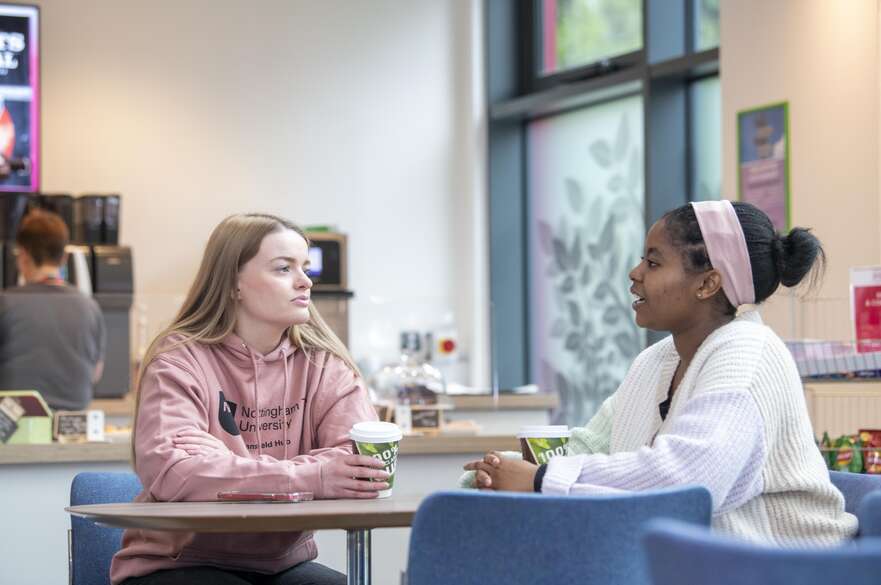
Studying at NTU further allowed me to reflect on my daily responsibilities and 1:1 interactions with patients/clients and put theoretical knowledge into practice. For example, I took the module Biological Perspectives on Mental Health and Wellbeing during my third year. I wrote an essay on the neurobiology of maladaptive aggression in animal and human studies. This offered me key knowledge to understand children’s challenging behaviours on a clinical/neurological level about aggression. Throughout my role as CWP, I could use this knowledge to deliver psychoeducation and offer strategies and techniques to help parents support and reduce their children’s challenging behaviours.
Curious about what a typical week looks like for a CWP trainee?
Initial assessment usually takes place before therapy begins. Assessments help determine the best support for your client and screen whether it is suitable. This entails asking questions about their presenting difficulties, family/school life, health, safety, and goals for the future. I would also complete a collaborative formulation with the client and review their Routine Outcome Measures (ROMS). ROMS are standardised questionnaires or other tools used to regularly assess a client’s progress and guide the therapeutic work and the effectiveness of treatment. Following this, a joint decision with my supervisor will take place to decide which intervention to use and inform my client.
A typical day for a CWP will always include several one-hour intervention slots. I usually see clients weekly, and preparation is needed for these appointments as we follow a manual for each of the interventions (Child and Adolescent Anxiety, Low Mood, and Challenging Behaviours), and they often rely on worksheets for home tasks. I usually see the young person or parent for around one hour, which allows us to complete ROMS and for them to provide feedback. After each session, case notes must be uploaded within the next 24–48 hours, depending on your service policies and risk.

Another part of my CWP role is engaging in weekly 1:1 supervision and group supervision. These are designed to provide you with the necessary support and guidance. Trainees have a set number of hours of required supervision for their course and later professional registration to an accrediting body. 1:1 supervision ensures that our wellbeing needs are discussed, we have access to suitable cases, and we can stick to the evidence-based treatment model. Group supervision is used to learn new CWP skills and intervention refreshers from each other, work on service development projects, and have case discussions.
My current role: Working within a Mental Health Support Team (MHST)
Since qualifying, I now work within a Mental Health Support Team (MHST), part of the NHS but based primarily in schools. MHSTs aim to increase early access to psychological support for CYP in educational settings. I work across several schools, delivering a mix of interventions:
- Whole-class groups: Brain Buddies, teaching children about emotional regulation
- Small groups: addressing anxiety, friendships, self-esteem, school transitions, and more
- Parent coffee mornings: introducing parents to our service and discussing the support available
- 1:1 interventions: for anxiety, low mood, and challenging behaviours I still work closely with CAMHS, ensuring continuity of care for more complex cases.
From my experience, the key difference between working in a specialist clinic and in an MHST is that in the clinic, clients came to see me, whereas now, within the MHST, I work in schools. I also now deliver far more group-based interventions and workshops, whereas the clinic role was primarily 1:1 client-focused.
It is important to note that every service you work for is different, so my experiences may not be exactly the same as yours, although they are very similar in principle.
Considering the role: Pros and Cons
If you’re considering a role like this, it’s important to know the potential benefits and challenges. Positives include making a real difference, supporting families and young people facing common challenges, enhancing knowledge and clinical skills, and opportunities for career development. Challenges may involve workload, risk and safeguarding responsibilities, and working with different caseloads. It can feel daunting, but comprehensive training and supervision are provided.
If you are considering a role like this and are looking to plan or prepare your next steps for an application, here are are a few tips based on my own experience.
CWP Interview tips for prospective students?
- Do research and get familiar with the CYP service and organisation (e.g., NHS Trust values)
- Understand the importance of Equality, Diversity, and Inclusion
- Know what CWPs offer and some interventions and presentations:
- Anxiety (primary and secondary school age) – worried, tense, afraid; experienced through thoughts, feelings, and physical sensations
- Low mood (adolescents) – down, upset, agitated, empty, isolated, tired, hopeless, low self-esteem; avoidance of social events, self-harm/suicidal behaviours, impaired thinking, insomnia, substance misuse, physical aches
- Common behavioural difficulties (parent-focused) – ADHD, ODD, defiance, fussiness, hurting others, excessive anger, tantrums, habit disorders, lack of eye contact
- Be familiar with ROMS (Routine Outcome Measures)
- Know the CYP IAPT principles (Increasing Access to Psychological Therapies)
- Be familiar with FIDO questions (Frequency, Intensity, Duration, Onset) for risk and safeguarding
- Be prepared for potential role plays and scenario-based questions
- Reflect on challenges you’ve managed at work or university
- Above all, be authentic
How do I get onto the course/trainee post?
To become a CWP, you need to complete a year-long training programme, and to enrol, you first need to apply for a trainee CWP position in a children and young people’s mental health service. You can learn more about this, as well as where to search for trainee roles, at https://www.healthcareers.nhs.uk/node/4141/childrens-wellbeing-practitioner, and can also find out more about the training on the Anna Freud website.
Final tip
Every journey into this profession is unique. Whether you begin in a clinical setting, an MHST, or another pathway, each experience will strengthen your understanding of mental health support and the difference you can make in young people’s lives.
 Psychology at Nottingham Trent University