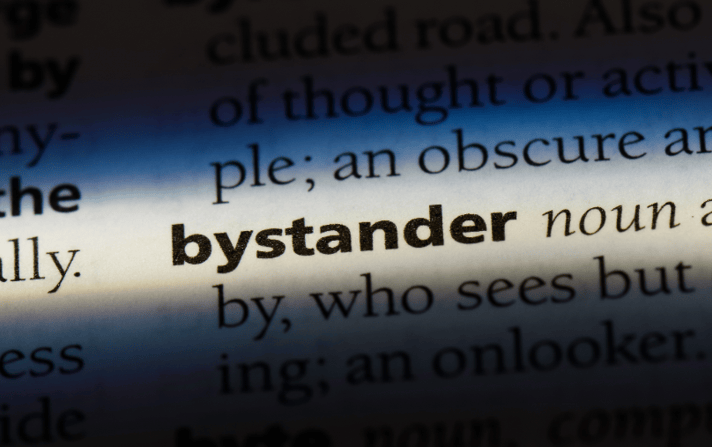
Monday 16th November sees the start of Anti-Bullying Week 2026. Every year, we in the Bullying and Aggressive Behaviour research group try to come up with ways of promoting the theme chosen by the Anti-Bullying Alliance, and this year the theme is “Break the Silence”. Whilst discussing how and what we can contribute or organise, the topic of bystanders was raised as an area we could focus on. Since researchers Latane and Darley brought us the Bystander effect in the 1960s, Psychology has continually explored why people can be prone to avoiding responsibility and prosocial behaviour towards people who may need it. As the University setting presents a carousel of varied social interactions, bystander behaviour is inevitable. To raise awareness of what the landscape of bystander behaviour may look like in Higher Education (HE), this blog will consider what students might witness at university and what makes us decide whether to speak up or stay silent.
What are students witnessing?
The nationwide Student Academic Experience Survey aims to capture a comprehensive and data driven picture of experiences of undergraduate students in the UK. To measure how campus safety and discrimination can directly impact academic performance the 2026 survey included a new question asking full-time undergraduate students about harassment encounters in the previous 12 months. Of the 10,065 students surveyed, 22% reported experiencing harassment. Trans, Jewish, Black, and LGBQAQ+ students reported the highest levels. As Psychology researchers in the field of aggressive behaviour, we are sadly not surprised at this statistic as it reflects what we already know about aggressive behaviour in other population such as workplace and other education environments.
In 2025, the Office for Students (OfS) reported that 24% of final-year students had experienced at least one form of sexual harassment since starting university. These findings highlight the prevalence of antisocial behaviour within higher education (HE). But what happens when others witness these behaviours? A survey conducted by the National Union of Students in 2015 found that 29% of new students had witnessed sexual harassment directed towards someone else during their first week of university, while 17% reported experiencing it themselves. These findings are sadly unsurprising, given previous research suggesting that sexual violence against women and girls can become normalised and accepted within university environments, including pubs and clubs (Roberts et al., 2019).
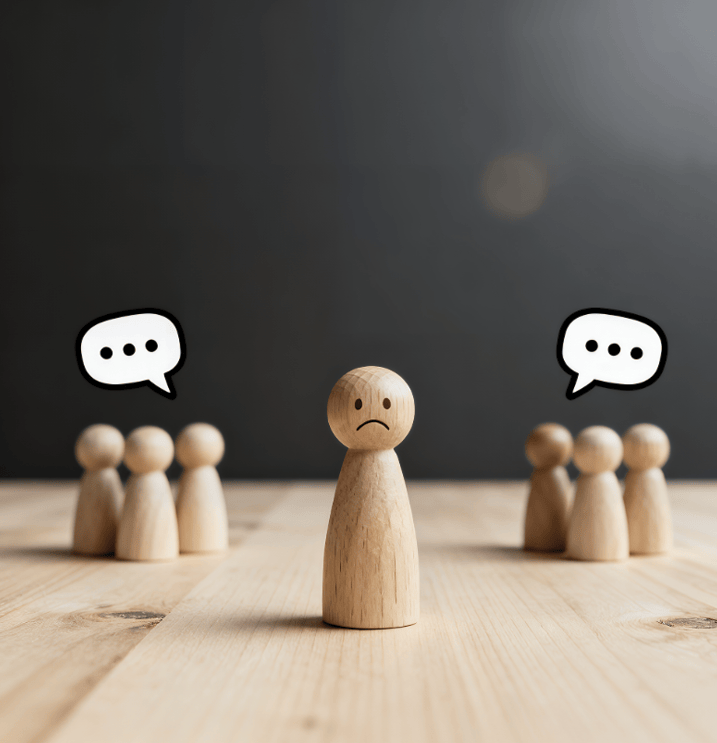
Recognising the importance of prevention, the OfS published a Statement of Expectations in 2021, encouraging universities in England to introduce effective training for students and staff to help prevent harassment and sexual misconduct. This approach was strengthened by new regulatory requirements introduced in August 2025. At Nottingham Trent University (NTU), we can see this commitment reflected in the mandatory Harassment and Sexual Misconduct module for all students. Additionally, all first-year undergraduate students are required to complete the Consent is Everything programme. These initiatives demonstrate how universities are taking steps to address harassment and sexual misconduct, while helping students develop the awareness, knowledge and confidence needed to become more prosocial bystanders.
Why do students remain silent?
Prosocial behaviour from bystanders can make a meaningful difference to those experiencing bullying or harassment. However, despite recognising that something is wrong, students may still hesitate to intervene. Research within UK universities highlights several barriers that can influence whether students decide to act. Hennelly et al. (2019) found that although students generally considered harassment and assault unacceptable and expressed confidence in their ability to intervene, fear of backlash was an important barrier. Concerns about social consequences, such as being ostracised by peers, damaging friendships or becoming a target themselves, can discourage students from speaking up. At its core, the question students may be asking themselves is: If I intervene, what might it cost me socially?
These concerns are not limited to social repercussions. Students may also fear for their physical safety or worry that intervening could escalate the situation and place them in danger (Hennelly et al., 2019; Labhardt et al., 2024). Another important barrier is uncertainty about what is actually happening. Not all bullying or harassment is immediately recognisable, and some situations can be ambiguous. For instance, a student might witness an uncomfortable interaction but be unsure whether the people involved know each other, are in a relationship or whether the behaviour is unwanted. Similarly, bullying can sometimes be dismissed as harmless banter, making it difficult for bystanders to decide whether intervention is appropriate. Additionally, Labhardt et al. (2024) found that students’ differing interpretations of sexual assault and consent could create uncertainty about whether a situation required intervention. When students are unsure how to interpret what they are witnessing, they may be less likely to act. From this research we can see that remaining silent is not necessarily a sign that students approve of bullying or harassment. Instead, their decisions may be shaped by concerns about personal safety, social consequences and uncertainty about whether, when and how to intervene.
Can our friends influence whether we intervene?
When it comes to stepping in, our friends can influence us in more ways than we might think. Hennelly et al. (2019) found that students reported being more likely to help someone they knew than a stranger. Similarly, research discussed by Roberts and Marsh (2021) suggests that friends are more likely than other witnesses to intervene in incidents of sexual violence. This perhaps isn’t surprising. When we know someone, we may be more likely to notice when something isn’t right and feel a greater responsibility to help.
But what happens when it’s our own friends behaving badly? Calling out a friend’s behaviour can be uncomfortable, particularly when it risks causing tension within the group or leaving us feeling excluded ourselves. On the other hand, having friends who support us can make speaking up feel much easier. Labhardt et al. (2024) found that perceived support from others could encourage bystander intervention. So, while friendships can give us the confidence to step in, they can also make us think twice. After all, it’s one thing to challenge a stranger’s behaviour, but are we as willing to speak up when it’s our own friends doing the bullying.
Does alcohol make a difference?
For many students, going to pubs, clubs and parties is a familiar part of university life. Alcohol can add another layer of complexity to bystander behaviour, potentially affecting both our ability to recognise when someone needs help and our willingness to step in. Interestingly, research suggests that alcohol can influence bystander behaviour in different ways. Labhardt et al. (2024), who interviewed university students in the UK and Australia, found that British students sometimes looked for signs of intoxication when deciding whether someone might need help. For example, seeing someone struggling to stand or communicate could make an otherwise unclear situation appear more concerning.
A further consideration is whether the bystander has also been drinking. Research by Dudley (2022), suggests that a bystander’s own alcohol consumption may be particularly important in shaping how they interpret situations involving sexual violence and whether they recognise the need to intervene. So, alcohol adds another layer of complexity to an already difficult decision. Seeing someone who is drunk might help us recognise that they need support, but when we’ve been drinking ourselves, making that judgement may not be so straightforward.
How can we break the silence?
Bystander behaviour is not simply a choice between doing the right thing and doing nothing. Social pressures, uncertainty, perceived responsibility and confidence can all influence how students respond. However, understanding these barriers gives us opportunities to challenge them. This Anti-Bullying Week, perhaps we should consider how breaking the silence does not always require a dramatic confrontation. Sometimes it begins with a small act of support, a willingness to challenge an inappropriate comment or simply asking someone: “Are you okay?”
Find out more about Anti-Bullying Week 2026 and learn how you can help to “break the silence” at https://anti-bullyingalliance.org.uk/anti-bullying-week-2026
References
Dudley, J. (2022). The impact of the presence of alcohol on bystander attitudes towards intervention into sexual violence: A mixed methods approach [Doctoral dissertation, York St John University]. Research at York St John. https://ray.yorksj.ac.uk/id/eprint/8833/
Hennelly, S. E., Hussain, S., Hale, T., Cadle, M., Brooke, J., & Davies, E. (2019). University student attitudes to prosocial bystander behaviours. Health Education, 119(5/6), 408–424. https://doi.org/10.1108/HE-05-2019-0023
Labhardt, D., Brown, S., Holdsworth, E., McKillop, N., Howat, D. J., & Jones, C. (2024). UK and Australian university students’ perceptions of the nature of sexual assault and intervening behavior. Journal of Interpersonal Violence, 39(9–10), 1952–1975. https://doi.org/10.1177/08862605231212171
Neves, J., Stephenson, R., & Armstrong, C. (2026). Student academic experience survey 2026. Advance HE & Higher Education Policy Institute. https://www.hepi.ac.uk/reports/the-student-academic-experience-survey-2026/
Office for Students. (2021). Statement of expectations for preventing and addressing harassment and sexual misconduct affecting students in higher education. https://www.officeforstudents.org.uk/
Office for Students. (2024). Condition E6: Harassment and sexual misconduct. https://www.officeforstudents.org.uk/for-providers/student-protection-and-choice/harassment-and-sexual-misconduct/condition-e6-harassment-and-sexual-misconduct/
Office for Students. (2025). Sexual misconduct survey 2025: Analysis of results. https://www.officeforstudents.org.uk/publications/sexual-misconduct-survey-2025-analysis-of-results/
Roberts, N., & Marsh, H. (2021). Evaluating a bystander intervention to disrupt interpersonal violence/abuse. Safer Communities, 20(2), 62–72. https://doi.org/10.1108/SC-05-2020-0018
Universities UK. (2016). Written submission from Universities UK (UUK) (SVS0053) [Written evidence submitted to the Women and Equalities Committee]. UK Parliament. https://committees.parliament.uk/writtenevidence/67906/html/

